
Eastman Kodak
The world's largest outdoor photographs in color, visible from almost any point in the Fair, call attention to the unusual pavilion below, which has an undulating display roof of reinforced concrete and 15 exhibit sections, including two theaters. The pavilion has a threefold purpose: to demonstrate the wealth of experience to be gained from photography, to provide scenes for on-the-spot picture-taking, and to show the influence of photography on various aspects of modern life, among them science, leisure, medicine, industry and education.
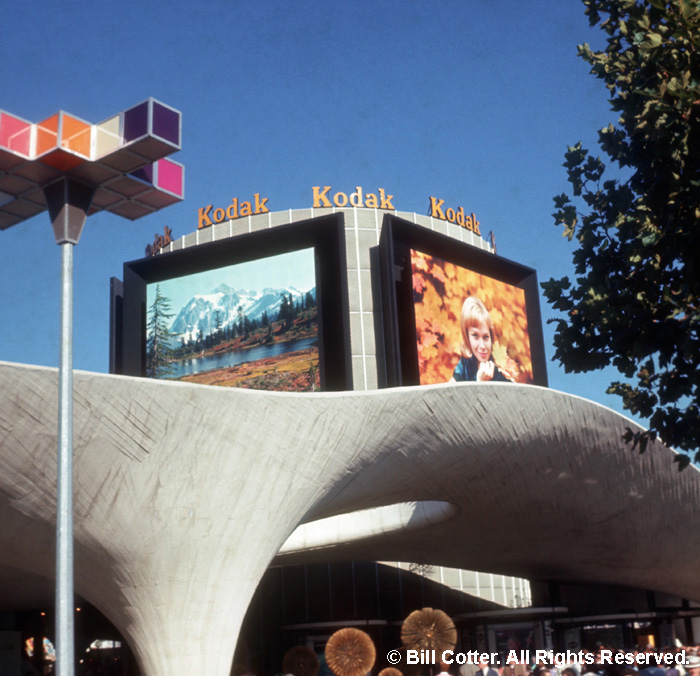
Color Giants. Five color photographs, each 30 by 36 feet in size and illuminated day and night, are mounted on a tower 80 feet high which rises above one end of the pavilion. The prints, changed every four weeks, are selected from among thousands of photographs taken by special camera crews that traveled through much of the world looking for striking pictures of nature and of people at work and play.
The large photographs displayed on the outside of the pavilion were presented in a style patterned after Kodak's new Carousel slide projectors. While many Fairgoers thought these images were giant transparencies, they were actually prints on special paper. For more details on how the photos were produed please check out this article from Popular Science. (CD #6 Set 27 #17)
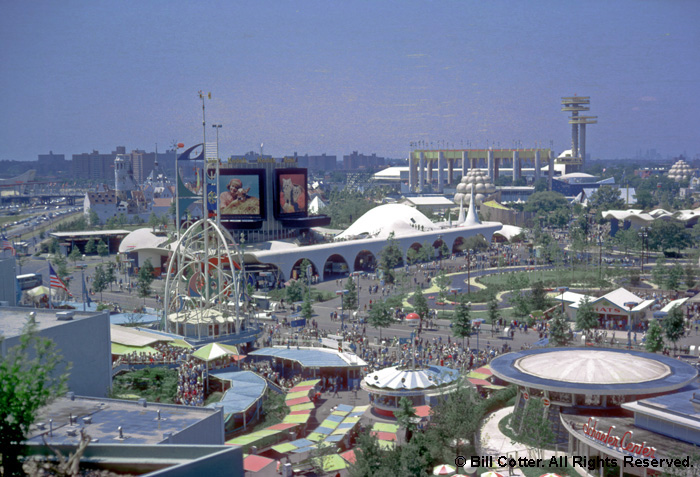
The Kodak Pavilion was quite large, as seen here in this view from the Better Living Center. Despite it's size, it was one of the first pavilions to be demolished following the close of the Fair. (CD #15 Set 75 #1)
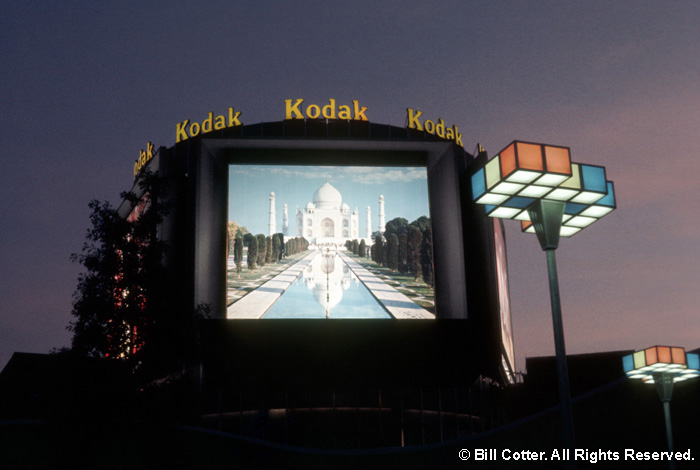
The special lighting system used to illuminate the slides at night did indeed make the photographs look like giant slides. (CD #7 Set 35 #30)
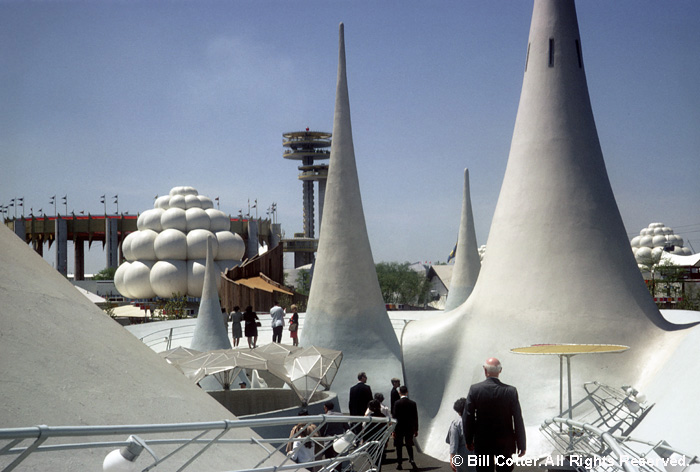
Floating Carpet. The roof of the building provides a variety of backgrounds for photographers, including gently sloping walkways, sculptured fountains, pools containing exotic flowers - and even an area simulating the moon's surface. Reached by stairways and escalators, the roof is 363 feet in length and is supported by an unusual arrangement of columns that from a distance makes it appear to float.
The fanciful "Moon Roof" of the pavilion was just the thing for the Space Age. It offered a number of interesting shapes and angles for amateur photographers. (CD #37 Set 183 #46)
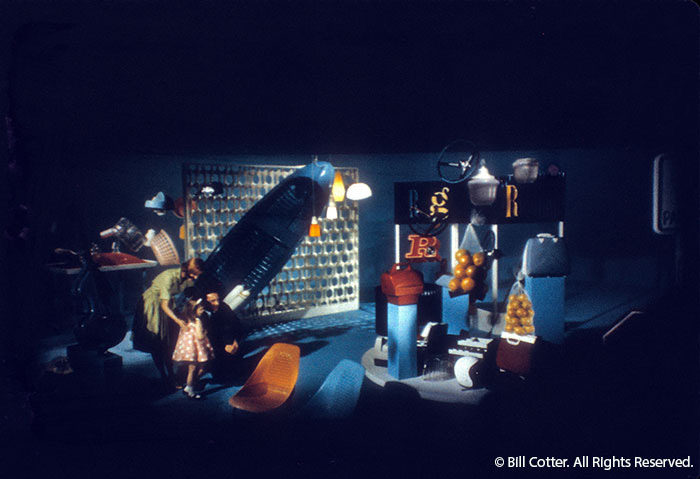
Seeing, Hearing and Learning. A 23-minute color movie, The Searching Eye, made by the noted film technician Saul Bass, gives a child's view of common-place and unusual wonders of the world. Utilizing a new multi-image, 70-millimeter projection process, the movie is shown in a large, air-conditioned circular theater which is built into the base of the eight-story picture tower. In the smaller theater, which is entered from the roof of the pavilion, there are fashion shows and exhibits of Kodak's textiles as well as other non-photographic products.
"The Searching Eye" was a popular film and featured music by Elmer Bernstein and narration by Gary Merrill. (CD #TBD Set 271 #50)
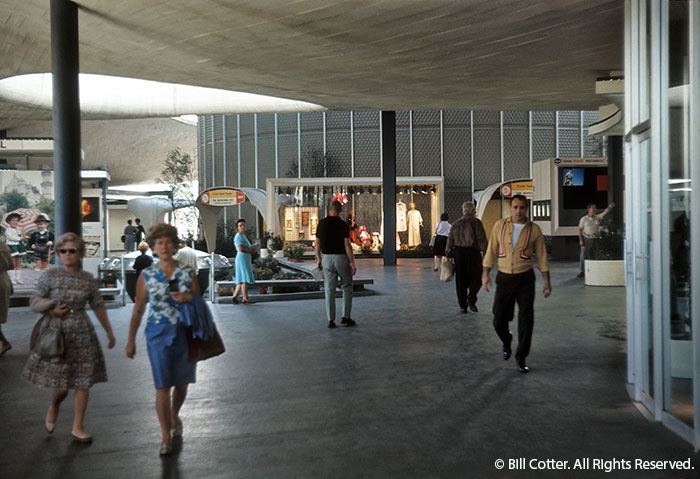
Answers and Exhibits. On the ground floor is a potpourri of services and displays. Attendants in an information center direct people to photogenic events being held at the Fair, specialists answer questions on photography, and technicians make free minor camera repairs and adjustments.
While Kodak was best known for its film and cameras, the company was also heavily involved with a variety of chemical and other businesses. Displays highlighted these ventures, as well as exhibits of work by professional and amateur photographers. (CD #TBD Set 353 #2)
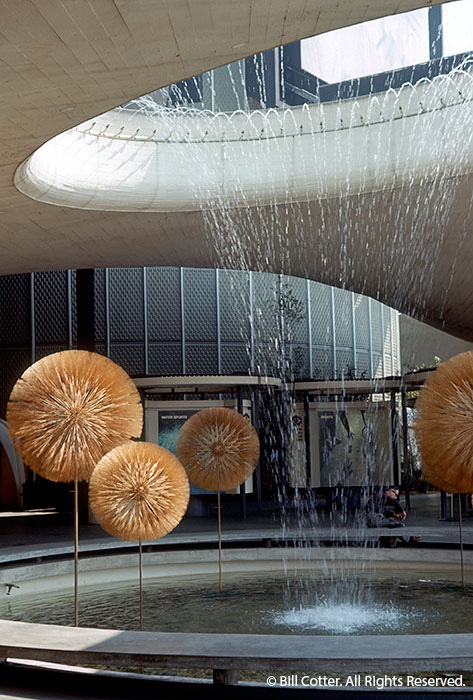
The pavilion also showcased an unusual metallic sculpture titled "Golden Dandelions" by Harry Bertoia. The metal rods used in their construction moved in the wind, acting much like real dandelions. (CD #TBD Set 353 #3)
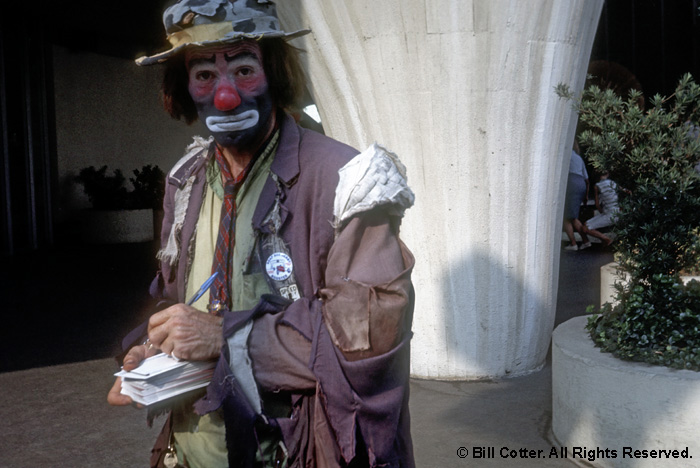
Famous circus clown Emmett Kelly, Jr. was hired by Kodak to entertain visitors and pose for pictures. Here he's seen signing a postcard of the pavilion which was given away as a free souvenir of the Fair. (CD #26 Set 142 #11)
Want more information on the Eastman Kodak pavilion?
8-21-62 - Groundbreaking booklet
Business Screen magazine
5-64 - Popular Science magazine: World's Largest Color Prints
Kodak at the Fair
The Dome Theatre Show
Picture Taking at The Fair